
Print the Legend
A few more thoughts about Bob Marley and some other similar reviews I've written.

One of the countless legends surrounding Bob Marley derives from his early career with the Wailers, when the band’s musical mentor Joe Higgs advised them to practice after dark in the local May Pen Cemetery. If the young musicians could play for those troublesome spirits—what Jamaicans and their Ghanian ancestors call ”duppies”—then simmering down a live audience of rude boys would be no problem. Several years after the Wailers’ mythic cemetery practice, during a fertile series of sessions with Lee “Scratch” Perry that helped reggae coalesce out of ska and rocksteady, Marley dubbed himself the “Duppy Conqueror,” portraying himself fighting off a fearsome “bullbucker” trying to “cold [him] up” on his way to Mount Zion. A bedrock of early reggae and a quintessential Marley cut, “Duppy” depicts an Old Testament style battle of wills rooted in Jamaican lore and delivered with the cocky spirit of a victorious footballer strutting off the pitch. Everything was in place a couple years before his first Island album—the self-mythologizing; the raspy croon; the languid, strutting confidence. It’s not remotely shocking that he became a star.
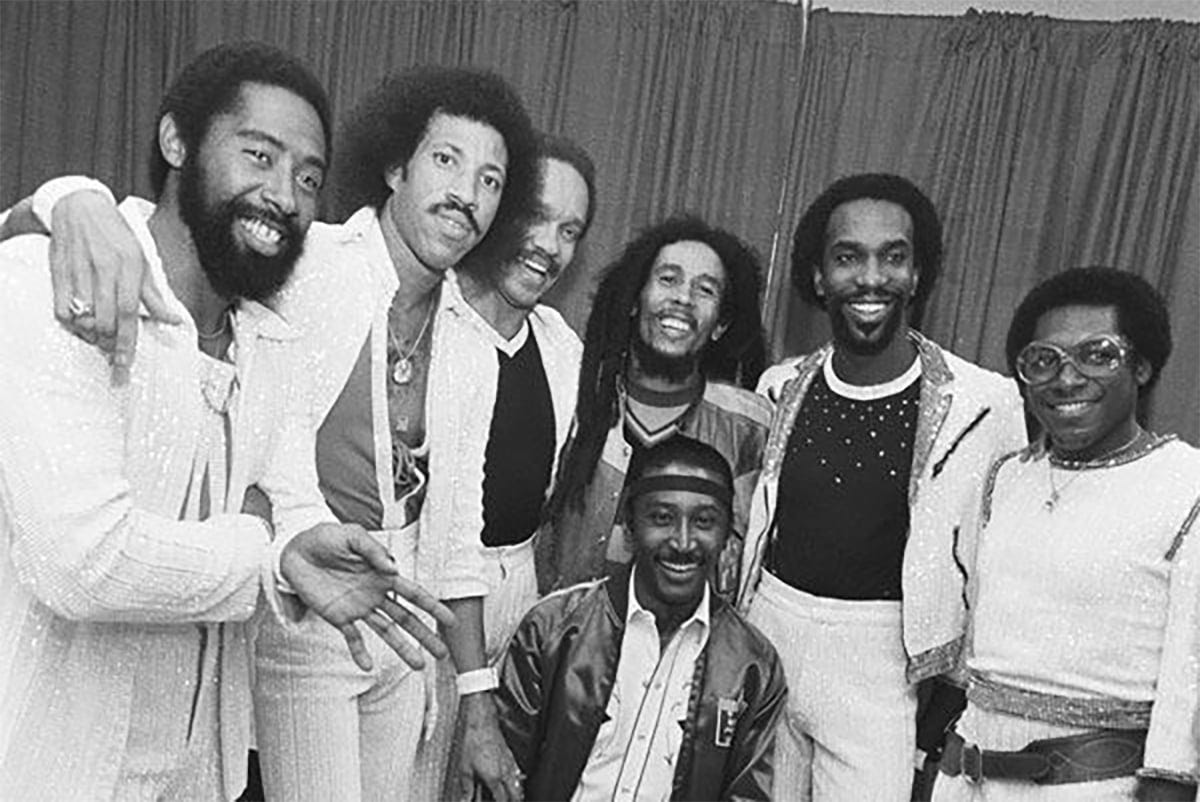
From Marley’s 1970s breakthrough onward, critics and industry observers were predicting reggae as the next big thing in rock. But instead, while dancehall took over Jamaican music and Legend was slowly working its way toward global repertory status, that other export from Kingston’s fervent music culture took over the pop landscape. Marley was as conversant with hip hop as he was with disco and punk—he shared a 1980 bill with Kurtis Blow and the Commodores—and it’s hard not to wonder how he would’ve fared in the MTV-dominated 1980s. Would he have collaborated with KRS-One? Hopped on “We Are the World” or Live Aid? Morphed into a silk-shirt retro merchant like Island labelmate Steve Winwood, or started a chart-topping second career like erstwhile Commodore Lionel Richie? Cut some tongue-in-cheek music videos like a reggae ZZ Top? Did Bob Marley have a Thriller in him? Judging by 1980’s “Could You Be Loved,” definitely the Marley song I’ve listened to the most over the last 30 years, he could’ve adapted like the Pointer Sisters, savvily incorporating synths and drum machines while remaining true to an analog musical spirit.
Or not. A side effect of researching and writing an essay about a 14-track compilation tribute to a rock star who died at 36 is the urge to speculate about what might have been. But of course, everything I (and you) think about Bob Marley is colored by his 1980s and 1990s canonization, a word which means both “to declare (a deceased person) an officially recognized saint,” and the creation of “a sanctioned or accepted group or body of related works.” Marley was sanctified, in other words, primarily by a particular group of songs released at a particular moment, which came to stand for not only the man, but his genre, religion, and nation. Marley’s image has since been overdetermined by nostalgia, iconography both bootlegged and sanctioned, and the alternately solemn and goofball tone of discourse surrounding him. No rock star apart from Elvis, John Lennon, or Tupac Shakur has been more exalted and mystified by the passing of time, the need for icons, and the urgency of commerce.
Anyway. My Legend essay is one of seven Sunday Reviews I’ve been lucky enough to write for Pitchfork over the years. I consider these to be mini-33 1/3 style pieces, challenging myself to research and write a condensed cultural history of the culture, media and politics of an era that spawned collections of music that we now deem “classic” for varying reasons. Here are the others:
Ice Cube, AmeriKKKa’s Most Wanted
Pink Floyd, Dark Side of the Moon
Alice in Chains, Dirt
Peter Gabriel, So
Stereolab, Dots and Loops
Ice Cube, Death Certificate
I’ve also written essayistic, overview-style reviews of “legacy” musicians and their works for other reasons—usually album reissues or deaths. Here are some of those:
The Zombies, The Zombies/I Love You/R.I.P. (upon the reissues of two albums and one post-breakup compilation, it was a fun challenge to write about the Zombies without writing about Odessey and Oracle)
Tom Petty, Damn the Torpedoes (I wrote this in a week after Petty’s 2017 death, and it ran with four other Petty album reviews on a single day)
Various artists, Singles - The Original Motion Picture Soundtrack (If I remember correctly, this reissue was long-scheduled, but its release coincided with Chris Cornell’s death. School was out, and I researched and wrote it over a torrid early-summer weekend)
Shuggie Otis, Inspiration Information/Wings of Love (I’d loved Shuggie since buying the 2001 Luaka Bop Inspiration reissue and it was a lot of fun to write about his life and career while focusing on Inspiration. The b-sides compilation is really good, too)
Sugar, Copper Blue, Beaster, File Under: Easy Listening (Fell in love with Bob Mould all over again writing this one. For whatever reason, a couple sentences toward the end about “Your Favorite Thing” jacking the verse melody from “Blown A Wish” and thus resolving the MBV connection from the lede got lost somehow in edits. It’s in the Word doc I just found, I swear)
The Pharcyde, Bizarre Ride II the Pharcyde (I got to go long on one of my favorite albums on the occasion of a collectible singles boxset being released, and also got sent the whole box to review [it used to play “Oh Shit” when you opened it, but that broke a long time ago])
That’s all for now. I hope to be back here soon with thoughts on more recent musical things.